
I remember my first time at a high-roller casino, eyes wide with excitement, I was immediately greeted with the pitch for their “exclusive” rewards program. Visions of comped suites and gourmet meals danced in my head. I played more than I intended, chasing a higher tier, only to realize later that the “rewards” required significantly more spending than I’d initially planned. It felt less like a perk and more like a gilded cage.
Casino rewards programs are designed to inspire loyalty, but they’re not always transparent. This article cuts through the casino marketing noise. As someone who’s studied the ins and outs of these programs, I’ll reveal the tactics casinos use to keep you spending and equip you with strategies to actually benefit without falling into common traps. Are those freebies truly free, or are you paying for them in hidden ways? Let’s find out.
What are Casino Rewards Programs?
Casino rewards programs, often called player’s clubs or loyalty programs, are marketing systems casinos use to foster customer loyalty. Think of them like a highly sophisticated version of a coffee shop punch card; instead of a free coffee after ten purchases, patrons earn points for their gambling activity, unlocking increasingly valuable perks as they play. These programs aren’t just about handing out freebies, they’re strategic tools that encourage repeat visits and provide casinos with a wealth of data about their customers’ preferences.
The core of a casino rewards program is a tiered system. Players start at entry-level and climb the ranks based on the amount they wager or the frequency of their visits. As players move up tiers, the benefits become more substantial, creating a powerful incentive to keep playing at that particular casino. This structure allows casinos to personalize offers and experiences, making loyalty programs a cornerstone of modern casino marketing. Moreover, the data collected through these programs provides insights into player behavior, informing decisions about game selection, promotional events, and overall casino operations.
The Basic Structure: Points, Tiers, and Perks
The foundation of any casino rewards program rests on accumulating points. Typically, points are earned based on the amount wagered, with different games offering varying earning rates. For instance, a casino might award one point for every five dollars spent on slot machines and one point for every ten dollars spent on table games. These points then translate into tangible rewards and contribute to a player’s tier status.
Tier benefits range from discounted hotel stays and complimentary meals to priority service and exclusive event tickets. A lower tier might offer a modest discount at the casino’s buffet, while the highest tiers could unlock access to VIP lounges, personal casino hosts, and even luxury gifts. For example, at Caesars Rewards, accumulating a certain number of tier credits unlocks Diamond status, granting access to Laurel Lounges and waived resort fees. Similarly, MGM Rewards offers Pearl, Gold, Platinum, and Noir levels, each with increasing benefits like priority check-in and complimentary suite upgrades. Understanding the points-to-benefits ratio and the requirements for each tier is key to maximizing the value of these programs.
Decoding the Deception: How Casinos Obfuscate Value
Casinos are masters of illusion, and their loyalty programs are no exception. They dangle the promise of rewards, enticing players with cashback, exclusive perks, and VIP treatment. But beneath the glittering surface lies a complex web of conditions designed to benefit the house far more than the player. A close look reveals tactics like point expiration, hefty wagering requirements, and subtly manipulated earning rates that significantly diminish the actual value of these seemingly generous programs. The goal? To keep you playing, and spending, for longer than you intended.
The Fine Print: Wagering Requirements and Point Expiration
That incredible cashback offer might seem like a steal, until you realize you need to wager the bonus amount 30, 40, or even 50 times before you can actually withdraw it. This wagering requirement, often buried in the terms and conditions, transforms a seemingly free reward into a significant hurdle. And don’t forget about point expiry! Earned points can vanish if you don’t gamble frequently enough, creating a constant pressure to play, even when you don’t want to. Many players have had their rewards expire, or almost expire, because of the fine prints.
Game Weighting: Why Slots Reign Supreme
Casinos often weight games differently when it comes to earning loyalty points. Slots almost always offer a much higher earning rate compared to table games like blackjack or poker. While slots are fun, this structure strongly encourages players to favor them, even if their skills or preferences lie elsewhere. If you’re looking to maximize your VIP experience, consider exploring video poker or specific table games that might offer slightly better rewards rate, while remembering that slots are designed to make you spend more. Try changing tactics, it may give you more prises!

The Psychology Behind the Points
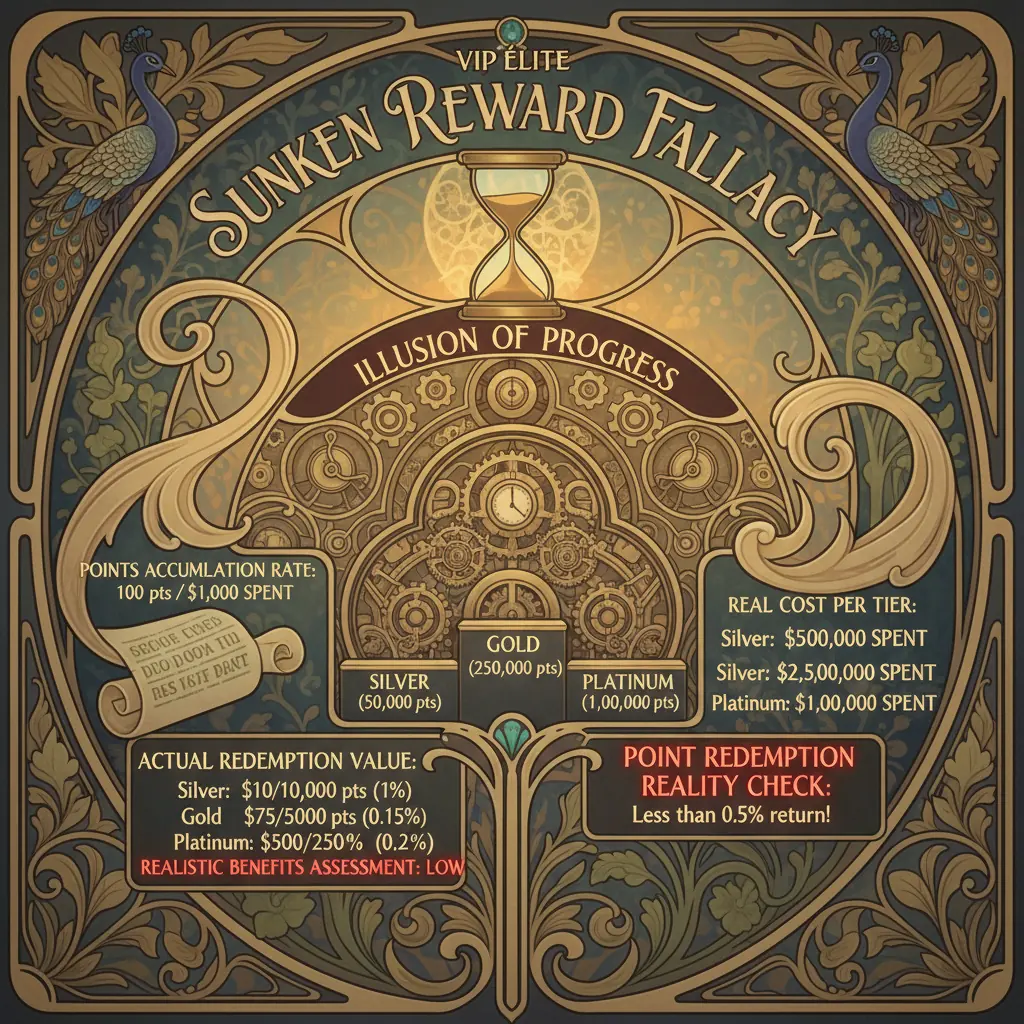
Casino loyalty programs are designed with a deep understanding of how the human mind works, specifically targeting cognitive biases that influence decision-making. One of the most potent of these biases is the sunk cost fallacy. This fallacy leads individuals to continue investing in something simply because they have already invested time, effort, or money into it, even when it’s clear that further investment is unlikely to yield positive returns. In the context of casino rewards, players may feel compelled to keep gambling to earn enough points for a reward, even if the odds are stacked against them. They might think: “I’ve already spent so much; I can’t stop now!”
This psychological manipulation isn’t accidental. Casinos use points, tiers, and rewards to create a compelling illusion of progress and value. This encourages continued spending, even when the rational choice might be to walk away. It’s a form of gamification where every wager, every spin, every hand played contributes to a feeling of accomplishment. However, it is important to be aware of these strategies and set limits to avoid falling prey to the allure of “just one more point” turning into significant losses.
The Illusion of Progress: Chasing the Next Tier
Tier progression is casino gamification at its finest. The allure of VIP status, with promises of exclusive benefits and enhanced rewards, drives players to gamble more than they initially intended. While these levels may seem enticing, the reality is that the benefits are often not as rewarding as they appear. It’s crucial to maintain a clear perspective and avoid the temptation to gamble excessively in pursuit of a higher tier. Remember always to set a limit, a budget to protect your financial well-being. Don’t try to win at any cost and realize that chasing the next tier is a carefully constructed illusion designed to keep you spending.
Are Rewards Programs Worth It? A Data-Driven Approach
Casino rewards programs dangle the promise of VIP treatment and exclusive benefits, but the real question is: are they genuinely rewarding, or are they a clever way to encourage more spending? A close analysis involves looking beyond the shiny exterior and diving into the numbers. This means evaluating point accumulation rates, understanding the true redemption values, and realistically assessing the actual benefits received. Many players find that what seems like a lucrative system on the surface, often translates to a slow trickle of rewards that barely offset the amount wagered. It’s crucial to move past the perceived value and understand the true return on investment (ROI). For example, a program might advertise a certain percentage back in rewards, but that percentage is often calculated against theoretical losses, not actual spend. Converting loyalty points to dollars often reveals a surprisingly low rate, and those “exclusive” benefits may not be as valuable as initially perceived, thus making it a sophisticated marketing trap.
Calculating the Real Cost of Each VIP Tier
The allure of moving up the VIP ladder can be strong, but it’s essential to calculate the real cost associated with each tier. A player aiming for “Silver” status needs to understand the exact wagering requirements. Similarly, achieving “Gold” rewards may sound impressive, but what volume of play is truly required? The higher tiers frequently demand significant expenditure. In my particular experience, upon reaching “Platinum”, the benefits were, realistically, not as generous as expected. Free play offers and bonus multipliers are great, only if those were consistent. The gap between the “Bronze” baseline and the “Silver” tier often requires a disproportionate increase in spending compared to the actual perks gained. The goal is to objectively measure whether the benefits of each tier outweigh the required investment.
Point Redemption Reality Check
The true value of any loyalty program hinges on point redemption. Casinos advertise with a high volume of points, but the points to USD exchange rate frequently disappoints. Often, a substantial number of points are needed to redeem even a small amount of cash or free play. Tactics on how to get the best possible return can be key. Are there specific days where point value is boosted? Are certain redemption options like merchandise or experiences a better deal than direct cash? It’s essential to do the math. In the end, the goal is to get informed and decide if dedicating time and money to a casino’s reward program leads to tangible benefits, or if it is just a system designed to keep players spending.
Strategic Play: Maximizing Rewards Without Losing Your Shirt
Casino loyalty programs are designed to entice players with promises of free plays, discounts, and exclusive experiences. However, the house always has an edge, so smart players need strategies to truly maximize these rewards without digging themselves into a deeper hole. This involves a blend of understanding program intricacies, playing strategically, and practicing responsible gambling habits.
One crucial aspect is knowing when to redeem your points. While it might be tempting to cash them in as soon as possible, sometimes holding onto them can unlock even greater benefits. Casinos often have tiers within their loyalty programs, and accumulating a larger point balance might catapult you into a higher tier, unlocking significantly better rewards and personalized offers. Similarly, timing your visits strategically can pay off. Casinos frequently offer bonus points or multipliers during off-peak hours or special events. Being aware of these promotions and planning your play accordingly can drastically increase your earning potential.
Responsible gambling must always be the priority. Set a budget, stick to it, and never chase losses. Loyalty programs should be seen as a bonus, not a justification for reckless gambling. The goal is to enjoy the experience and potentially offset some of your costs, not to try and “beat” the casino system.
Playing the Right Games for Optimal Rewards
Not all casino games are created equal when it comes to loyalty rewards. While most programs award points based on the amount wagered, some games offer a better return to player (RTP) than others, or contribute more to the accumulation of loyalty points. Games with a lower house edge, such as Blackjack (when played with optimal strategy), certain video poker variations, and even some table games, give you a better chance of extending your playtime and earning rewards without draining your bankroll. You should focus on fair games when you want to accumulate points.
Finding Hidden Perks and Personalized Offers
Beyond the standard publicly advertised benefits, casino loyalty programs often have hidden perks reserved for their most valuable players. These can include access to exclusive events, complimentary meals at high-end restaurants, or even personalized concierge services. These hidden perks are part of Casino’s strategy to attract and maintain whales that regularly spends tons of money. Building a relationship with casino hosts is often the key to unlocking these benefits. Casino hosts are like personal concierges that offer personalized service. They have the power to comp rooms, meals, and shows, and can provide access to exclusive events.
Conclusion
Empowered Play: Informed Decisions for the Savvy Gambler
Casino rewards programs dangle the allure of freebies and VIP treatment, but the savvy gambler understands that these perks come at a price. Loyalty programs are meticulously designed to encourage increased spending and more frequent visits. This article underscores the importance of approaching these programs with a healthy dose of skepticism.
The key is strategic participation, not blind devotion. Understand the tiers, the points system, and, most importantly, your own gambling habits. By setting limits, tracking spending, and recognizing the psychological tactics at play, one can navigate casino rewards programs without losing sight of responsible gambling practices. Ultimately, informed decisions lead to empowered play.